






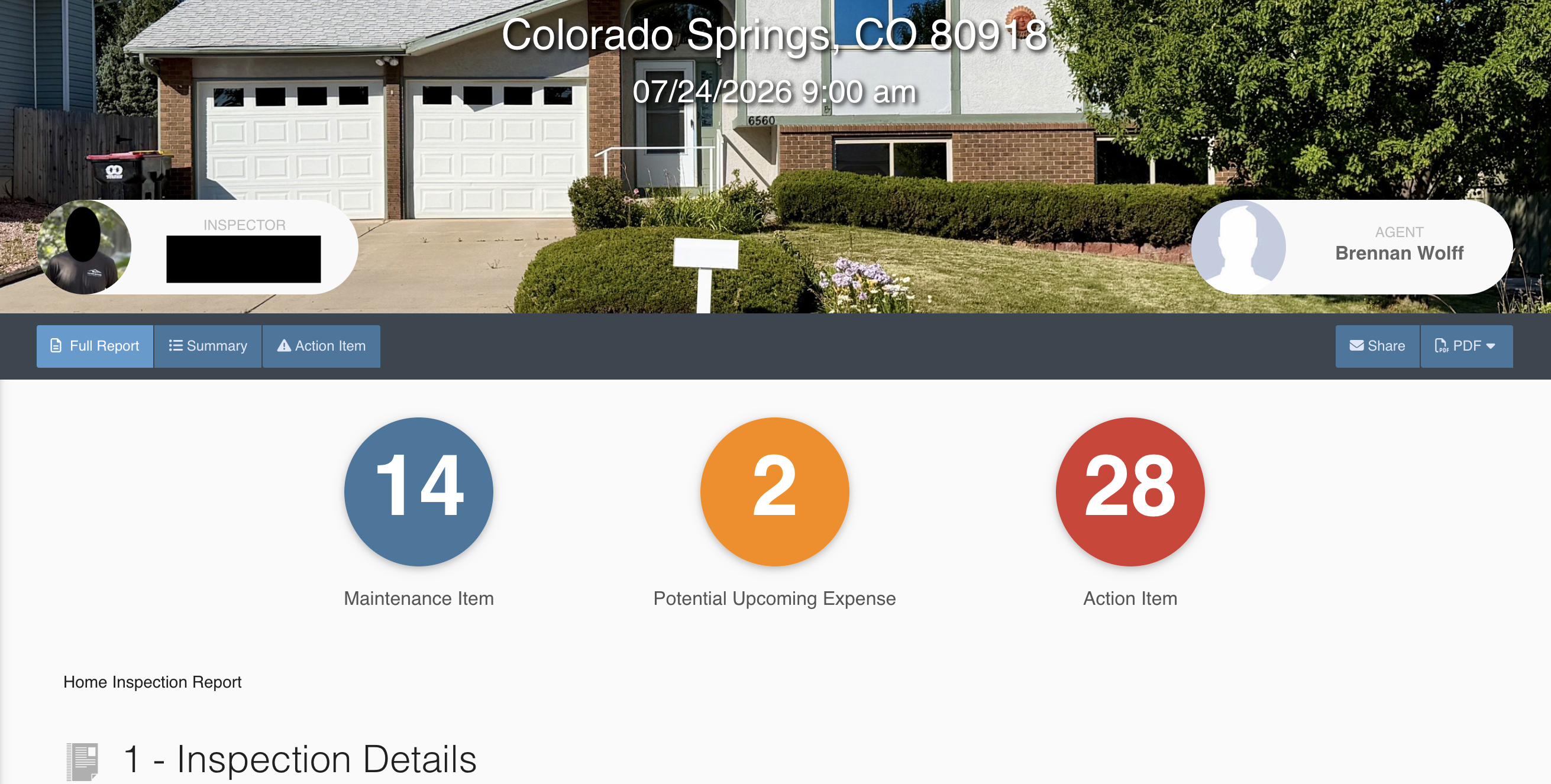
Most findings are fixable. How you negotiate them is what holds a deal together.
The short answer: In Colorado Springs, Monument and Black Forest, inspections most often turn up elevated radon, hail-worn roofs, aging furnaces and water heaters, sewer line problems, drainage and soil issues, and, on rural homes, well and septic concerns. Most of these are fixable. The key to negotiating them is focusing on safety and major systems, backing requests with contractor bids, and choosing between repairs, a credit or a price change based on what's cleanest for both sides.
By Brennan Wolff, Broker, Realtor®
Getting an offer accepted is the easy part. Inspection is where deals most often get shaky. NAR research has found inspection issues are one of the leading reasons contracts fall through.
I'm a certified Real Estate Negotiation Expert, and this is the part of the deal I spend the most energy on. Here's what usually comes up on the north end, and how to handle it whether you're buying or selling.
What are the most common inspection issues in Colorado Springs?
Radon. El Paso County sits in the EPA's highest radon zone, so elevated radon is common, especially in homes with basements. The good news is that a mitigation system is a well-understood fix, and buyers here should always test.
Roofs and hail. Hail is a fact of life on the Front Range. Inspectors often note hail damage, granule loss or a roof near the end of its life. Roof age and past insurance claims matter, both for the deal and for the buyer's ability to insure the home.
Furnaces and water heaters. At this elevation, heating systems work hard. An older furnace or water heater is one of the most common findings, and buyers want to know the age and service history.
Sewer lines. In homes on city or district sewer, a sewer scope camera can find root intrusion, cracks or sags in the line to the street. It's a small cost for the buyer and can uncover an expensive repair.
Drainage, grading and soils. Parts of the Colorado Springs area have expansive soils that swell and shrink with moisture. Inspectors watch for foundation cracks, poor grading and downspouts that dump water against the house.
Electrical and safety items. Missing GFCI outlets, double-tapped breakers, older panels and missing smoke or carbon monoxide detectors are common and usually inexpensive to fix.
Wells and septic. In Black Forest and rural Monument, buyers should test well water quality and flow and have the septic system pumped and inspected. The Buyer's Guide covers this in more detail.
How does the inspection process work in Colorado?
The standard Colorado contract gives the buyer an inspection period with set deadlines. By the inspection objection deadline, the buyer either accepts the home's condition, ends the contract, or sends the seller a list of items they want addressed. The buyer and seller then have until the resolution deadline to agree on a solution. If they can't agree, the contract can end.
Those deadlines are short, which is why having a plan before the inspection matters.
How should buyers negotiate after an inspection?
- Focus on what matters. Prioritize safety issues, major systems and anything that affects insurability or financing. A list of small cosmetic items makes sellers dig in.
- Get real numbers. A contractor's bid carries more weight than a guess.
- Consider a credit instead of repairs. A seller credit lets you choose your own contractor and control the quality of the work. Your lender has to approve credits, so check limits early.
- Think about winter limits. If snow keeps a roof or air conditioner from being checked, a repair escrow or credit can cover what can't be verified yet.
- Keep the bigger picture in mind. Compare the cost of the repair with the cost of starting your search over.
How should sellers handle inspection requests?
- Don't take it personally. Almost every inspection finds something.
- Sort the list. Separate safety and major system items from minor requests.
- Pick the cleanest solution. Sometimes a repair makes sense. Often a credit or a modest price adjustment is simpler for everyone.
- Use your records. Recent furnace service, roof documentation and septic pumping records take a lot of air out of requests.
- Consider a pre-listing inspection. Finding issues on your own timeline lets you fix them or price them in before a buyer finds them.
Frequently asked questions
Should I test for radon in Colorado Springs? Yes. Radon is common here and you can't detect it without a test. Mitigation systems are a standard fix if levels are high.
Is a sewer scope worth it? Usually, especially for older homes or homes with mature trees near the sewer line. It's an inexpensive add-on that can uncover a costly repair.
Do sellers have to fix everything on the inspection report? No. In Colorado, the buyer and seller negotiate which items, if any, get addressed, and either side can walk away if they can't agree by the deadline.
Is a credit better than a repair? Often, for buyers. A credit gives you control over the work. But it depends on the issue and your lender's limits.
Want a steady hand through inspection?
Whether you're buying or selling, the inspection period is where good negotiation pays off most. Learn more about how we work on Buy with Us and Sell with Us, or reach out to me directly.
This post shares general information, not legal advice. Contract terms and deadlines vary, so review your specific contract with your broker and, if needed, a real estate attorney.
Sources: NAR, Home Inspection Issues a Major Reason for Contract Terminations
Check out this article next