






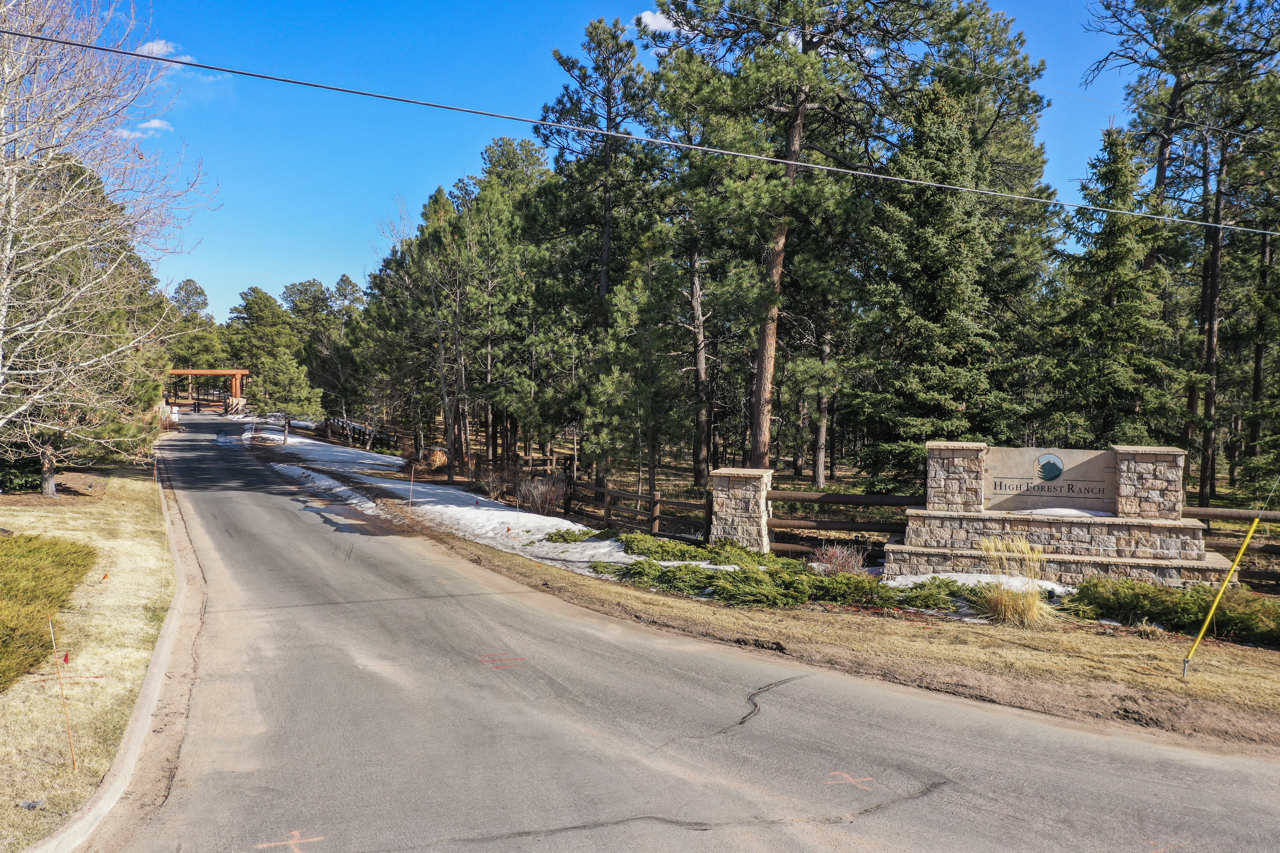
Well or district: the answer shapes your bills, your control and sometimes your negotiation
Short answer: It depends on the address. Most Black Forest homes run on a private well. Homes in Monument, Gleneagle and much of the Northgate area are served by the Town of Monument, a water and sanitation district, a metro district or Colorado Springs Utilities. Outside the city, much of that water comes from the same place your neighbor's well does: the Denver Basin aquifers. The real difference for a buyer is who controls the water, how it's priced, and who fixes it when something goes wrong.
Key Takeaways
- Find out who supplies a home's water before you fall for the house. It can change your monthly costs more than most buyers expect, especially in summer.
- On a district system, someone else handles treatment and repairs, but they also set the rates, and rates change.
- On a well, you trade the water bill for pump electricity and maintenance, and you own both the problems and the fixes.
- Metro district debt is paid through property taxes. Look it up before you buy, not after.
- District water tends to shape which neighborhood a buyer picks. A well tends to shape the negotiation.
Three ways a home out here gets its water
Every address on the north end falls into one of three setups.
- A private well. Most of Black Forest and much of the acreage around Monument. You pump from the aquifer under your land, under a state well permit. I covered the day-to-day side in living with a well and septic.
- A town or water and sanitation district. The Town of Monument, Woodmoor, Donala in Gleneagle, Academy Water and Sanitation in the Pleasant View area, and others. Inside Colorado Springs city limits, including much of the Northgate area, it's Colorado Springs Utilities.
- A metro district. Some newer subdivisions get water through a metropolitan district set up to build and run the neighborhood's infrastructure. Flying Horse North is a good example of both worlds: its first filing is all well and septic, while the later filings are on metro district water.
The quickest way to confirm which one a home has is the property tax bill. It lists every taxing district attached to the parcel, and you can look it up through the El Paso County Assessor.
Where the water actually comes from
Under most of this area sit four stacked aquifers: the Dawson, Denver, Arapahoe and Laramie-Fox Hills. The state is blunt about them: the water "is not renewable. When the groundwater is used, it is being 'mined'" (Colorado Division of Water Resources). State permits limit pumping based on a 100-year aquifer life.
El Paso County goes further. New development in unincorporated areas has to show a 300-year water supply. An independent review presented in October 2025 recommended no changes to that rule (El Paso County). The consultant reported steady water levels in most surveyed wells since the 1980s, with some localized decline, and warned the basin will eventually reach a "tipping point." Critics called the rules "built on guesswork" (Gazette).
Districts are working on this too. The Loop, a regional pipeline first estimated at $160 million to $190 million, was meant to move north-end districts off Denver Basin groundwater. Monument's town council voted unanimously in August 2026 to leave it, calling it "not a financial possibility for the town." Woodmoor says the project remains feasible (Gazette).
What that means for you: a district doesn't automatically mean a different source than a well. It means someone else manages the source and the long-term plan, and you pay for that.
What it costs: district bills vs. well costs
District water comes with a monthly bill, and the summer months are where it climbs. Donala's own 2026 rate sheet compares what 20,000 gallons in a month costs with four north-end providers (Donala 2026 rates):
Provider | 20,000 gallons in a month (2026) |
|---|---|
Colorado Springs Utilities | $209.72 |
Woodmoor Water and Sanitation | $224.34 |
Donala Water and Sanitation | $242.90 |
Triview Metropolitan District | $270.00 |
Those are Donala's published comparisons. Sewer charges and fees vary by provider, so check each one's current schedule. Academy Water and Sanitation prices water in tiers, and 20,000 gallons comes to about $300 in usage charges plus $172.77 in monthly water and sewer service fees at its 2026 rates (Academy WSD).
What I see in practice: a lot of these district homes sit on big lots. If you have a large, grassed yard in Gleneagle, keeping it green costs real money. I've seen summer water bills there in the $300 range, and that number has changed more than one buyer's mind about a neighborhood.
On a well, there's no water bill. Your costs come down to the electricity that runs the pump, periodic maintenance, and any treatment you choose to add. Our family's well dates to the 1950s, and in all the years we've had it, the service calls have been rare. We replaced the pump motor once, which stirred dirt into the water and took some extra work to clear up. That's about it.
Who's in control when something goes wrong
This is the part buyers tend to underweight.
On district water, there's a middleman between you and your tap. If the district has a treatment or water quality problem, you're waiting on the district to fix it. Districts publish an annual water quality report, and it's worth reading before you buy.
On a well, the source is yours, and so is every problem. If the water tests poorly, or you want it filtered or softened, that's on you to handle and pay for. We've never treated or softened ours. It has a hard, mineral character, and very light blonde hair in our house has picked up a slight green tint from it. We like the taste better than city water anyway.
Two more things to know about wells:
- Power. No electricity, no water. We keep backup generators so we can still pump when the power goes out.
- Deep freezes. In a hard cold snap, lines can slow and your flow drops. Keep water lines dripping, especially in the basement.
Also read the well permit. Ours was grandfathered in 1974, which is why it's allowed to water livestock as well as the house. We've run 15+ horses and 30+ cattle on it. Most permits issued today allow far less, so never assume a well can do what the last owner used it for.
A few years back we asked about drilling deeper. Our well servicer told us the water level hadn't dropped an inch in more than 20 years. That's one well on one property, not a promise about yours, which is why a yield test matters.
In my experience, most people on well water would never go back to district water. There's something about owning your water source and not depending on anyone else for it, except the power company.
Metro districts: read the debt before you buy
Metro districts build roads, water lines and other infrastructure up front, then repay that debt through property taxes on the homes inside them. They also set their own fees, and those can change.
Flying Horse shows how big this can get. In 2023, the Gazette reported that one Flying Horse metro district covering 1,599 homes owed $58 million, and that owners there paid about 40% of their property taxes to the district (Gazette, 2023). By 2024, residents of two districts owed more than $70 million for infrastructure (Gazette, 2024).
That doesn't make a metro district home a bad buy. It means the tax bill is part of the price, and some buyers simply don't like an outside board setting what they pay. Either way, it affects how easily a home sells later, so look at the mill levy on the tax bill before you write an offer.
How water changes the deal
The two setups show up in different places in a transaction.
- District water mostly shapes the neighborhood decision. Buyers who see a $300 summer bill usually move on to a different area rather than negotiate on price.
- A well shapes the negotiation. The buyer is taking over a whole system that sits on the property, so there's room to have it tested, inspected and certified, and to negotiate repairs based on what turns up. More on that in home inspection issues and negotiation.
Questions to ask about any home's water
Question | Why it matters |
|---|---|
Who is the provider? | Shown on the tax bill. Sets your rates and your service. |
What did the last 12 months of bills run? | July and August tell you the real cost of a big yard. |
Is it in a metro district? | Check the mill levy and the district's debt. |
Where is the latest water quality report or lab test? | Districts publish one each year. For a well, order your own test. |
What does the well permit allow? | Household use only, or livestock and irrigation too? |
How old is the pump, and what does a yield test show? | Tells you how much water the well delivers and what's due for replacement. |
Is there backup power? | A well doesn't pump without electricity. |
Any watering restrictions? | Some districts limit outdoor watering days. |
FAQ
Can I switch from a well to district water?
Only if a district line is close enough and the district agrees to serve the property. Connection fees can be significant, so call the district before you count on it.
Do I pay anything for water on a well?
No monthly bill, but you pay for the electricity to run the pump, periodic maintenance, water testing, and any filtering or softening you choose to add.
Is well water safe to drink?
Only a test tells you. Have a certified lab test the water during your inspection period, and retest periodically after you move in.
Will Black Forest wells run dry?
Nobody can promise either way. The county's 2025 review found steady levels in most surveyed wells since the 1980s, with some localized decline. Individual wells vary, so judge any well by its own permit, yield test and history.
Comparing a well home with a district home?
Send me both addresses. I'll pull who serves each one, what the tax bill carries and what I'd want checked before you write an offer. Reach me here.
This post is general information, not legal or water-rights advice. For questions about a specific well permit or water right, contact the Colorado Division of Water Resources or a water attorney. For current rates, check with the provider directly.
Sources: Colorado Division of Water Resources · El Paso County, Oct 2025 · Gazette, Oct 2025 · Gazette, Aug 2026 · Donala 2026 rates · Academy WSD · Gazette, Mar 2023 · Gazette, Sep 2024
Check out this article next